Greenspan – hero or zero?

8 Nov
alan-greenspan

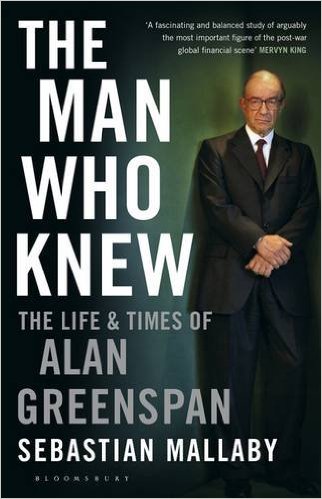
Mallaby on Greenspan

Good session last night at the LSE with Sebastian Mallaby talking about his book on Greenspan. You can see some pics on Twitter via #LSEGreenspan.

The discussion on whether interest rates/monetary policy should be used to deal with asset bubbles was interesting. Mallaby’s view was that the Fed could at least set interest rates, whereas trying to use regulation to deal with asset bubbles (and financial irregularities in general) was much more difficult – attempts to do so were bound to be mired in Washington politics and/or the ‘balkanisation’ of US regulation.

The position has echoes of Keynes ‘monetary policy a l’outrance’ – taking bold an decisive action to deal with a slump or boom. But Greenspan – ‘the man who knew’, as Mallaby explained, was not a man willing to act or confront. Knowing is only half, perhaps less than half, of what a central banker needs to succeed.


Business model innovation – Clayton Christensen article in MIT Sloan Review

7 Oct

screen-shot-2016-10-07-at-09-49-50

Good piece by Clayton Christensen and others on this – see http://bit.ly/2dReEdm. Includes  a useful business model descriptor and a life cycle of business models which reflects Michael Porter’s great chapter in Competitive Strategy on the transition to industry maturity.

MasterCard purchase of VocaLink

30 Aug

An interesting interview in Fortune with a MasterCard exec (Michael Miebach) on why they are doing the VocaLink deal – interesting in two ways. First, the writer of the Fortune piece doesn’t appear to have heard the interview, as he focuses on P2P payments, which isn’t the focus of what Miebach was talking about. Second, in the interview itself, Miebach explains that, while they have a great position in cards, they don’t know much about ACH (viz interbank) payments, and think they should. No doubt the growth of near real time payments globally and the associated apps possibilities (like Zapp) are stirring MasterCard’s interest. Worth a listen! – http://fortune.com/tag/mastercard/.

Hope for a post-Brexit world?

18 Jul

Oxford Spires

‘Remainers’ have been somewhat short of hope post the 23rd June referendum – chortling at the collapse of the leadership ambitions ‘the Oxford set’ (Johnson, Gove) not withstanding. But now an Oxford man has come forward with an intelligent way out of our self-induced morass . George Yarrow (Hertford College and the Regulatory Policy Institute) has called attention to the potential to use the European Economic Area as a way of retaining the benefits of the single market while using its safeguarding provisions to deal with immigration pressures (see http://bit.ly/2a3FQ43).

There are strong similarities between his approach and elements of ‘Flexcit’, which Richard North et al have been advocating (see http://bit.ly/2a6bPA7, or the Youtube movies – http://bit.ly/29P3Ftj, but skip the first 8 minutes).

Whilst tempted to write a longer post on the technicalities, I will forebear. It’s the sunniest day of the year so far, and I didn’t create this mess (stand forward D Cameron plus the Eurocrats pushing for ‘A Country called Europe’). So read the pieces, see the movie, and pray that the new occupant of 10 Downing Street is doing the same!

The EU Referendum – a guide for the perplexed

16 Jun

So here’s a paper written originally for my children trying to explain what the EU is all about and why we need to remain:EU Referendum – A Guide for the Perplexed v2 I’m sharing it here as there is clearly a lotto misinformation out there from, inter alia, the Murdoch press.

Brexit – are there any economists left in favour?

27 May

OECD Brexit Cover

I have just finished reading the OECD’s report on the the economic consequences of Brexit (see http://goo.gl/mezune). It’s a damning piece of work for anyone who believes Brexit won’t damage the economy or who follows the line ‘well, we can just negotiate our own trade deals can’t we?’ Not surprisingly, it chimes in closely with what the head of the World Trade Organisation (WTO) has said about the difficulties of the UK trying to ‘go it alone’ in seeking new trade agreements (see https://goo.gl/YfW21F).

The OCED report also provides a useful summary of other studies done (see Table 5, p36 of the OECD Report). All show big negative effects of Brexit – larger for the UK, but significant also for the remaining EU members.

A key Brexit argument against these studies seems to be that they are just produced by an ‘elite’ group of economists who failed to forecast our last recession. In fact, the main institutions weighing in against Brexit – the IMF, the OECD, the WTO – are the bodies set up after 1945 to ensure we never had to endure again the ‘began my neighbour’ trade wars and competitive devaluations of the 1930s. They have played a major role, whatever their mistakes, in creating the postwar prosperity many of us enjoy.

A more reasoned challenge would be to say that aggregate figures can hide important distributional impacts. If we vote to remain, as I hope, we need to look more carefully at this, and the impact of net EU migration on specific communities. If there are gains from remaining in the EU, the gainers can afford to compensate the losers, and should so so.

So to return to the title – have we any economists left who favour Brexit?

Bank-based mobile payments

5 Apr

Looks as if there is lot of interesting stuff happening in Copenhagen at the Money 20/20 conference – #Money 2020Europe on Twitter. Auka (formerly mCASH) for example has an interesting White Paper out on bank-based mobile payments (see http://auka.io/#/money2020 for your copy).

Auka’s cloud-based solution is offering banks a white label variant of Paym and ZAPP in the UK –  P2P smartphone payments and an alternative for merchants to card payments and PayPal. It will be interesting to see how they (and their competitors) fare. Customer and merchant uptake will be the problem – why would customers use this rather than Apple Pay (or the Android alternative when it lands in Europe)?


EU Referendum – it’s all about trade

2 Apr

I recall an English teacher remarking that there were so many grammatical mistakes in his local newspaper – the Bucks Free Press as it happens -that ‘he needed a bowl to be sick in’ when he read it.

I have much the same reaction reading (or listening to) the Brexiteers’ views on leaving the EU – brought into sharp relief this week by an article in the FT by Peter Sutherland. He points out how difficult it will be for the UK to negotiate new trade agreements if it were to leave – and notes that when we leave the 22 EU trade agreements with the UK’s Commonwealth partners will cease to apply. The full article is worth a read – see https://goo.gl/7HheeZ

Now it is true that the EU institutions are overdue for reform, and that some of the Remain arguments are tenuous too (difficult to see what staying or leaving has to do with sharing intelligence on terrorism, for example). But effectively our decision in the 70s to join and remain was about trade. We had options then as to what we should do – much more difficult to see that we have a realistic leave option now.

Time to rejoin some old colleagues

23 Oct

CockburnGroom

In case you are wondering why you have seen fewer posts of late…

Since March this year I have been working on a couple of payments-related projects with CEPA (see http://www.cepa.co.uk, now added to the blogroll on the right). The projects have gone well, and I’ve enjoyed the interaction with the CEPA team. So I’m now joining them (on a part time basis) as a Senior Adviser to develop their work in financial services.

One of the great aspects of CEPA is their recruitment of ‘bright young things’ with up to date economics and quant skills. So there is a trade to be done – they can keep us up to date on the latest thinking in economics while we pass on some of our painfully-acquired knowledge of how management consulting works.

Cash ain’t King in Greece!

1 Jul

No doubt many of you have been watching this unfolding Greek tragedy. And I’ve tweeted already about the excellent CEPR piece about he background to the crisis and Greece’s (pre-financial crash) economic mess – see goo.gl/v7NLKo

But it occurred to me to wonder how card transactions are faring in Act II (Act III being, I assume, where everyone gets killed, which seems the likely outcome at the moment). Well, according to Visa Europe’s news update from a couple of days ago, not too badly (see goo.gl/wsyZ8u ). Not only is there a distinction between Greek and non-Greek Visa card holders (to whom the €60 daily limit doesn’t apply), but Visa also says that card transactions are being processed as normal, and helpfully hints that some shops are still doing cashback!