Tag Archives: Apple Pay

A UK competitor for Apple Pay?

2 Nov
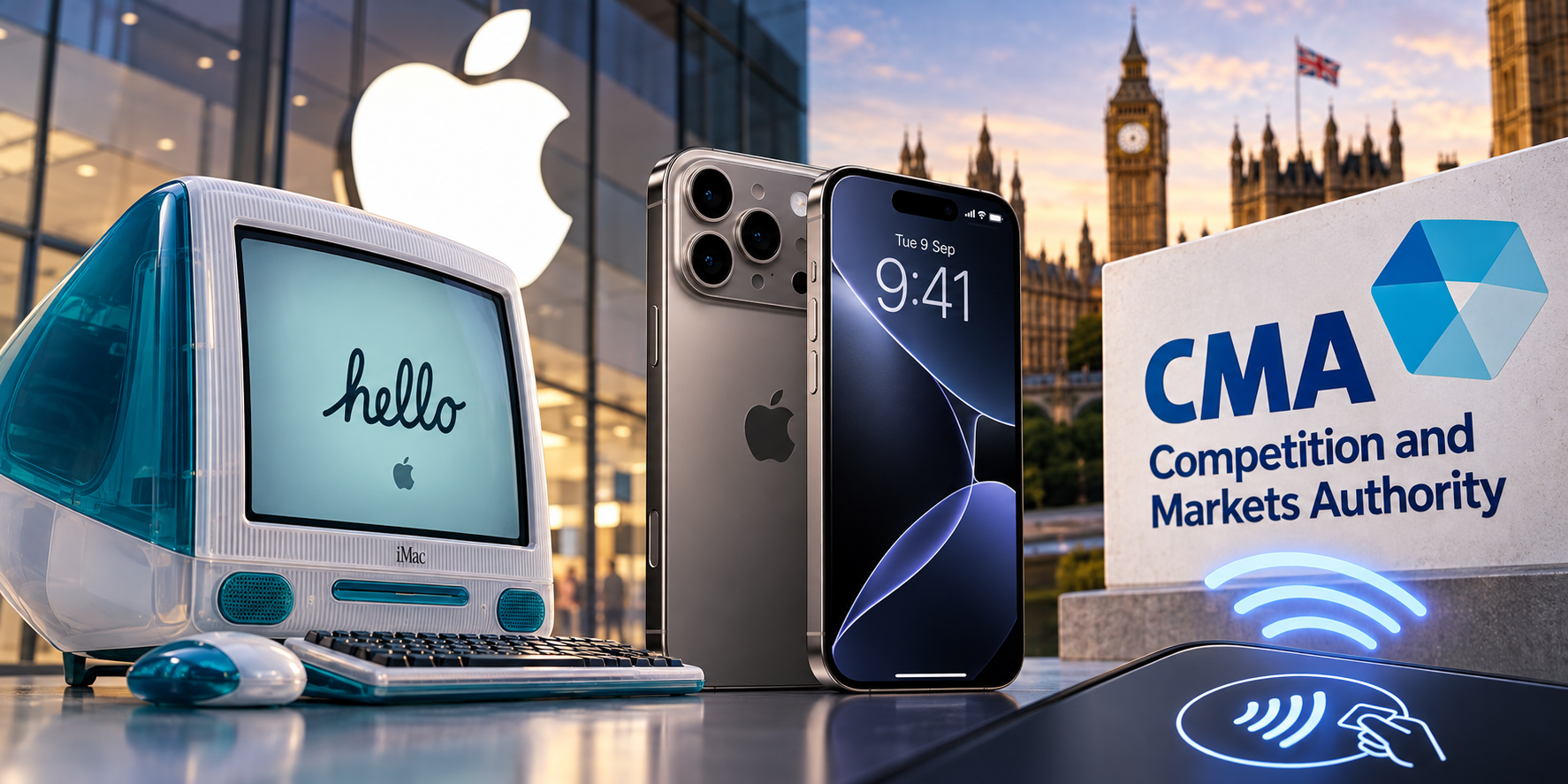
An iMac computer displaying 'hello' on the screen, an iPhone 13 laying on a surface, a sign for the Competition and Markets Authority (CMA), and the silhouette of the Big Ben clock tower in the background.

Okay, I admit it – I am a big, big Apple fan. I acquired my first Mac computer in 1996 and I’ve been worshipping at the shrine ever since. The Apple stuff just works. Unlike a certain other platform I could mention.

So I was curious to see that the UK’s Competition and Markets Authority (CMA) was consulting on widening fintech competitors’ access to Apple’s digital wallet.

There is a lot of technical stuff here – Near Field Communication (NFC) protocols which enable tap-to-pay, Secure Elements (SE) versus Host Card Emulation (HCE) etc etc – but fundamentally the issue comes down to one of consumer behaviour. If Apple played nicely, allowed a fintech HCE access on FRAND (fair, reasonable, non-discriminatory), and a fintech launched a competing wallet would consumers switch to using it?

Well, they would need some incentive. Perhaps the fintech could partner with (say) a Tesco or another grocer and offer extra Clubcard points? Mind you, the grocers have already tried their hand at banking and decided it wasn’t for them.

There are also some interesting arguments on incentives to corporate innovation. NFC was not an Apple invention – in fact, they were late to the party. But as so often they have packaged innovation brilliantly and are continuing to develop Apple Pay capabilities. How will any FRAND terms reward that innovation?

More fundamentally, is a competing wallet what we want? The EU has gone down the CMA route and Apple now offers EU fintechs access to its NFC capabilities. Vipps in Norway (already well used for Account to Account (A2A) payments) has launched a competing wallet, and hit 1m users – but to do so it needed to offer Visa and Mastercard on its wallet. Competition in the digital wallets market – even if successful – might not do much for any competition issues in the cards market.

Perhaps the good folks at the CMA have been reading Kierkegaard? “It is better to try something and fail than to try nothing and succeed”
Apple Pay – an iTunes for the card industry?

16 Sep

Credit: Tambako/Flickr

Credit: Tambako/Flick

The headline in the FT is uncompromising – “Apple Pay is poised to do for payment companies what the iPod did for the music industry” – and the piece that follows is an interesting exploration of what Apple’s announcement last week signified. So is this the end of Visa and Mastercard’s dominance of the world of card payments? (see http://goo.gl/YIsvVS for those with FT access.)

Probably not. Buried in the detail of that piece (and in other analysis from, for example, Mobile Payments Insider http://www.mobilepaymentsinsider.com) is a rather different picture, which has a lot more to do with the security features of Apple devices, and the resultant savings in fraud costs, than with the death of the card titans. The latter might usefully paraphrase Bogart :“Reports of our death are greatly exaggerated”.

Tim Cook, CEO of Apple, made much of Apple Pay being designed with the consumer in mind. Be that as it may, the biometric security technology built in to Apple’s devices will serve the more prosaic end of making payments via an iPhone and other Apple gadgets less prone to fraud. Don’t forget that the launch was in the US, a country who leads the world in patent innovation but has, for whatever reason, lagged Europe by a decade or so in the adoption of CHIP and PIN as a method of verifying payments. Apple Pay neatly gets round that impasse. And also ushers in the new era of single-use tokenisati

And at the rumoured 0.15% per transaction, the merchants, card processors and bank issuers look to have acquired something of a bargain – a price Apple is no doubt willing to concede (for now) to secure its seat at the global payments table, and to lure the banking top brass to Cupertino to pay homage.

So what do the card titans lose? Well, the physical plastic card may not be as ubiquitous as heretofore, but that will probably save them in renewals and lost card replacements. Their infrastructure, and charges to merchants for processing, will roll on pretty unchanged. True, their own e-wallet offerings may now be quietly shelved or allowed to wither on the vine – but that again will yield savings on investments. Perhaps the biggest blow will be to their plans to expand their scope. Apple is pushing them firmly back into a payments processing box and saying “leave the customer side to people who know what they are doing.” Which, as anyone who uses Verified by Visa or the Mastercard alternative will testify, is probably no bad thing.